
Case study · An automotive-parts and power-tools plant in Japan
A 41-second cycle with 15% fewer operators.
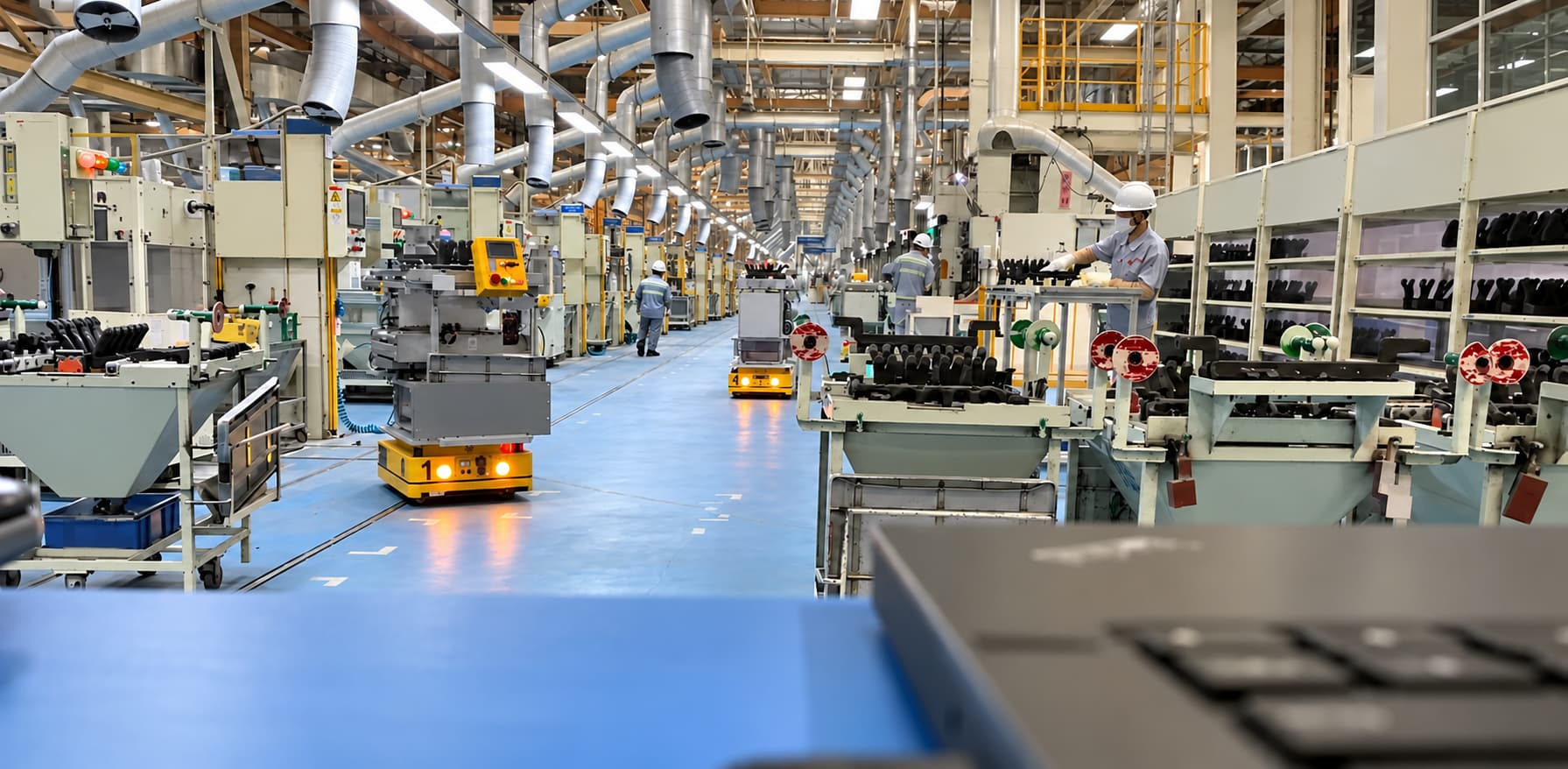
In-plant AMRs replaced manual trolley runs between production lines, keeping parts on takt and making each delivery traceable.
41 s/pcs
Production takt supported
15%
Fewer operators required
30–51%
Peak labor-cost reduction
Figures reported by the manufacturing partner. Product category: AMR
At a glance
The plant needed a faster link between production lines without adding trolley traffic. In-plant AMRs now keep a 41-second takt, cut operators by 15%, and reduce peak labor cost by 30–51% while tracking each delivery.
About the plant
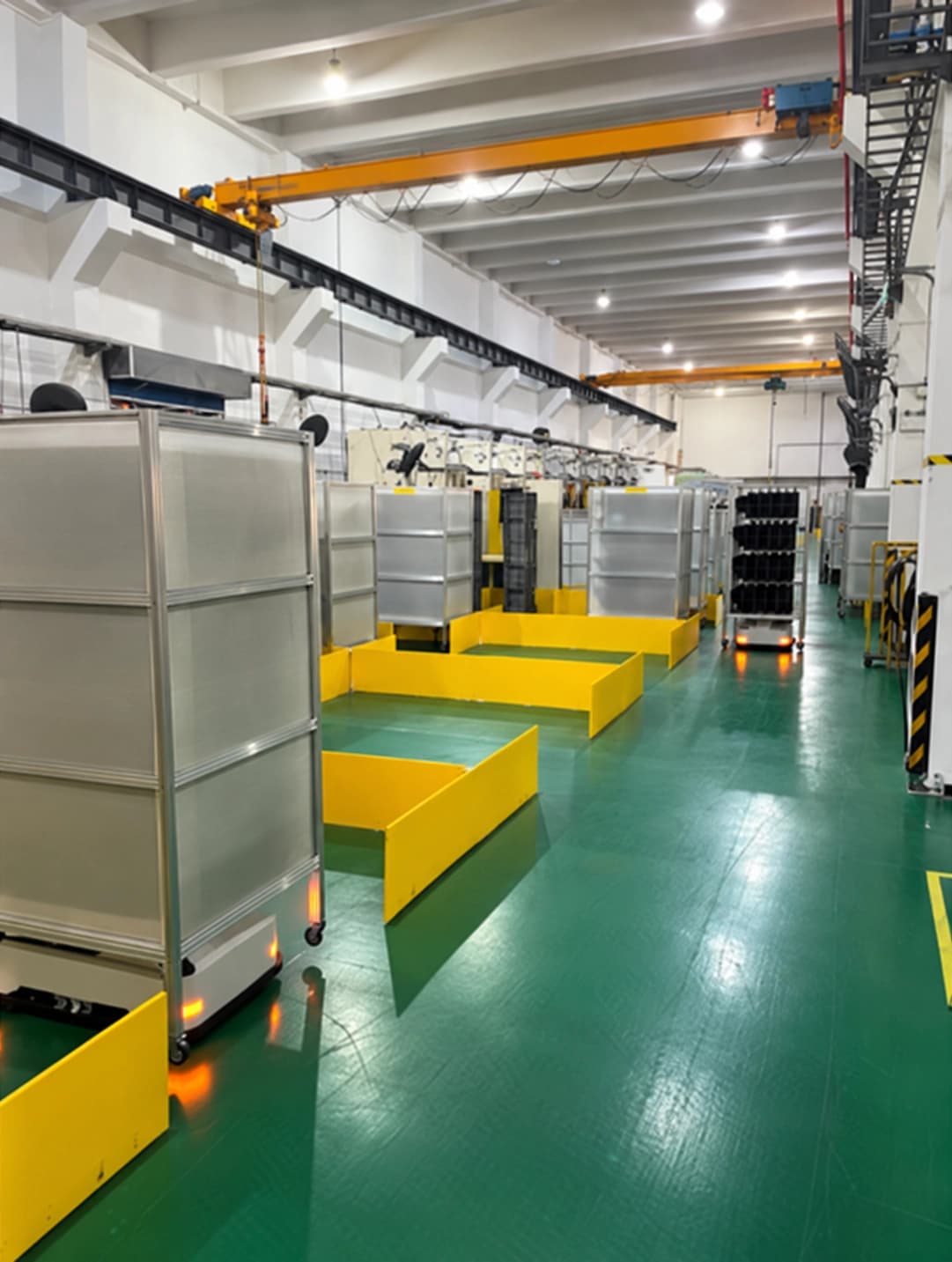
This is an automotive-parts and power-tools plant in Japan. The site produces automotive parts, service equipment, hardware, machinery and power tools, and needed a quicker way to connect one production line to the next.
The challenge
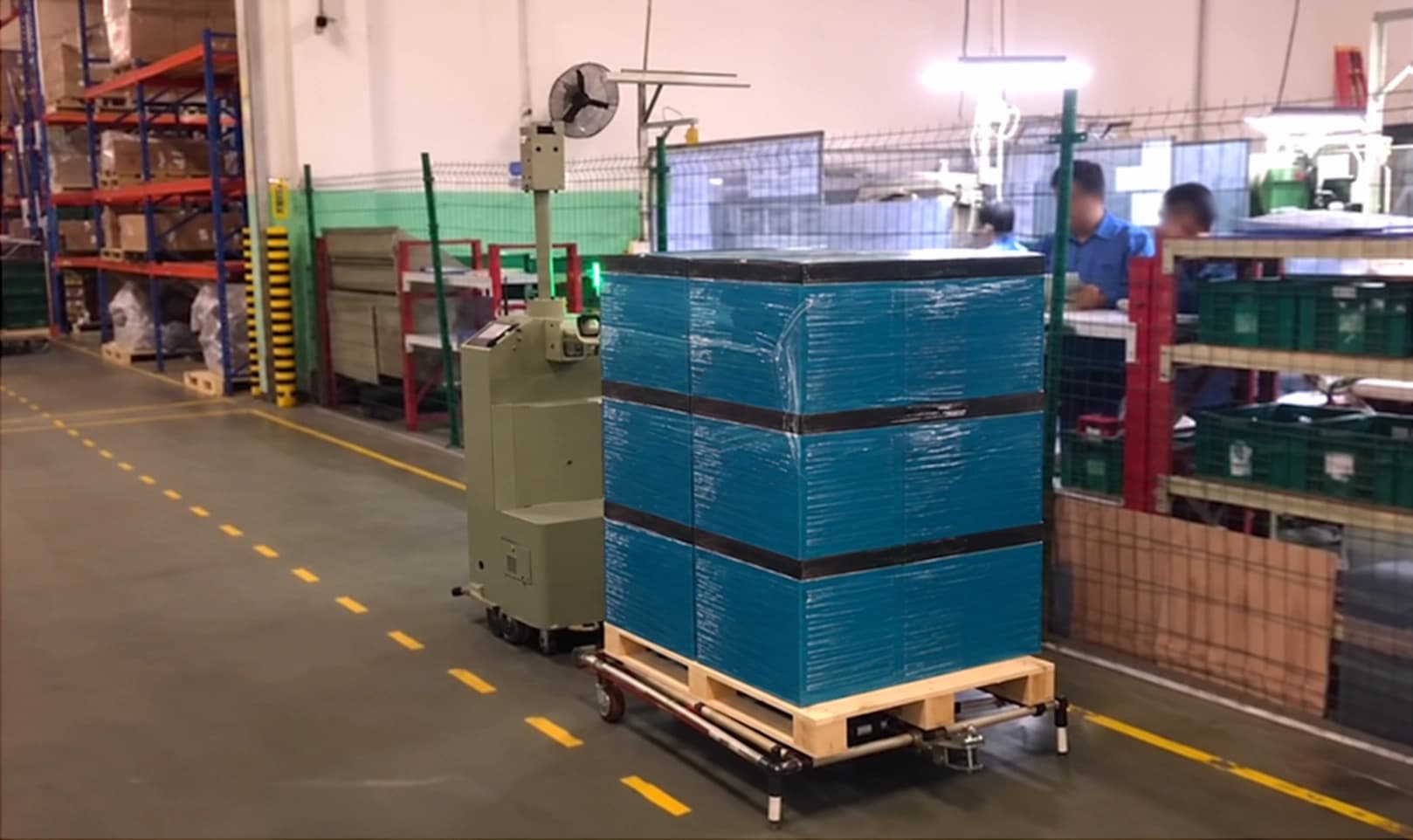
Parts had to move on a 41-second takt. Manual trolley transport made that pace hard to hold. Error tolerance was low, and material could not drop out of sight between stations.
- Line-to-line moves had to stay inside a 41-second cycle.
- The handling design needed a high safety standard, not an extra layer of manual traffic.
- Replacing trolley work also had to keep every load traceable.
The solution
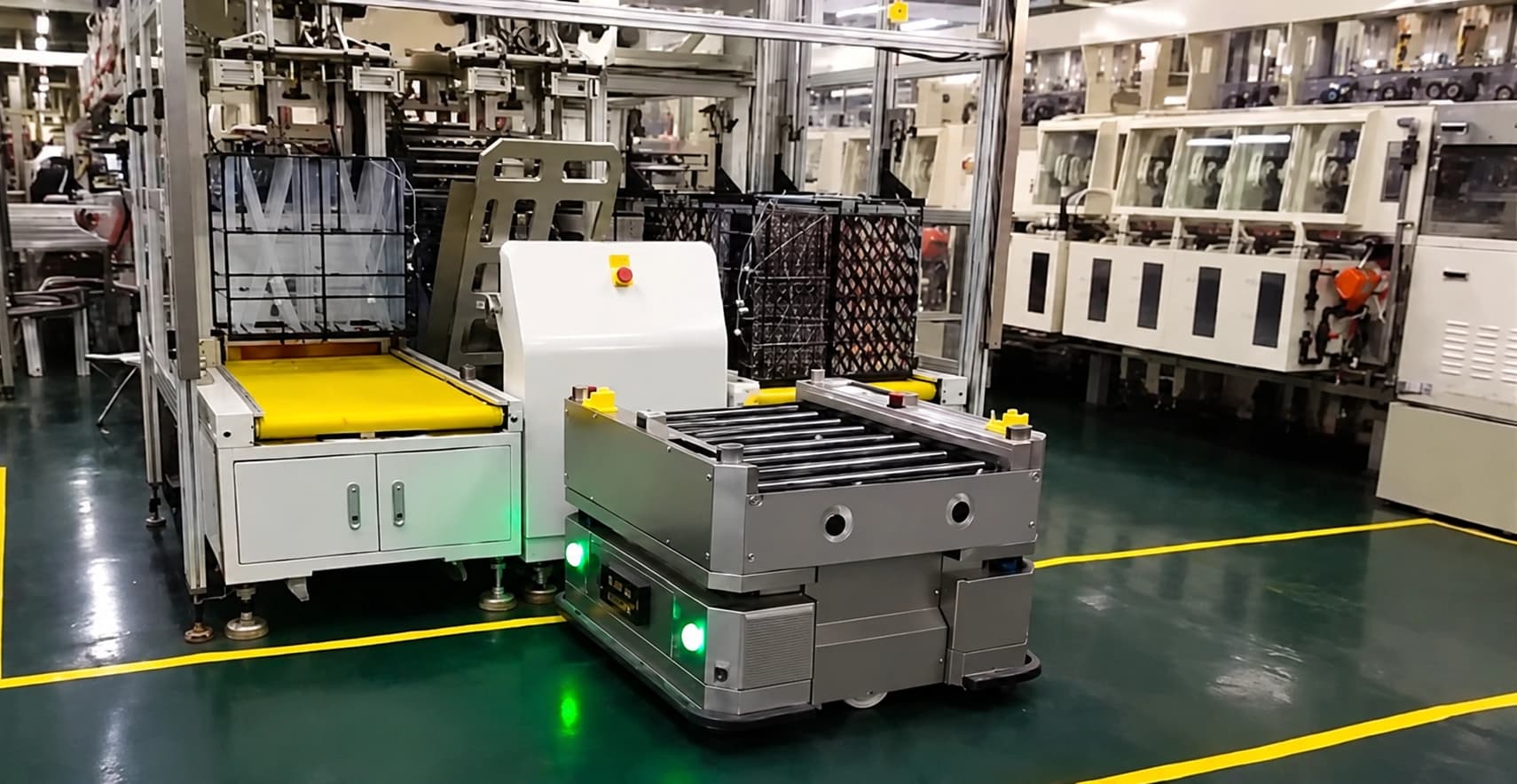
AMRs now run the in-plant route that used to depend on operators pushing trolleys. The vehicles connect production steps, dispatch repeatable missions and keep a record of each material move.
The layout stays open to people on the floor. The plant did not add a second, slower transport layer around the lines; the AMRs took over the repetitive transfers and left operators on value-added work.
The result
The flow now supports the 41-second takt. Operator count fell by 15%. During peak periods, labor cost dropped by 30–51%. Material movement stays visible from pickup to drop-off.
- 41 s/pcs production takt is held by the automated route.
- 15% fewer operators are needed on the transfer job.
- Peak labor cost fell by 30–51%, with full material tracking.
Plan a similar plant flow.
Share the takt, route and operator constraint. BotOnly will map the work to a short list of systems that can run the same class of plant job.