

The Humanoid Robotics Landscape in 2026: What Buyers Should Actually Watch
Practical overview of 15+ humanoid platforms from research kits to commercial pilots: $16k-$150k pricing, real capabilities vs. marketing claims, deployment readiness, and how to evaluate Tesla Optimus, Figure 02, Unitree, and Agibot.
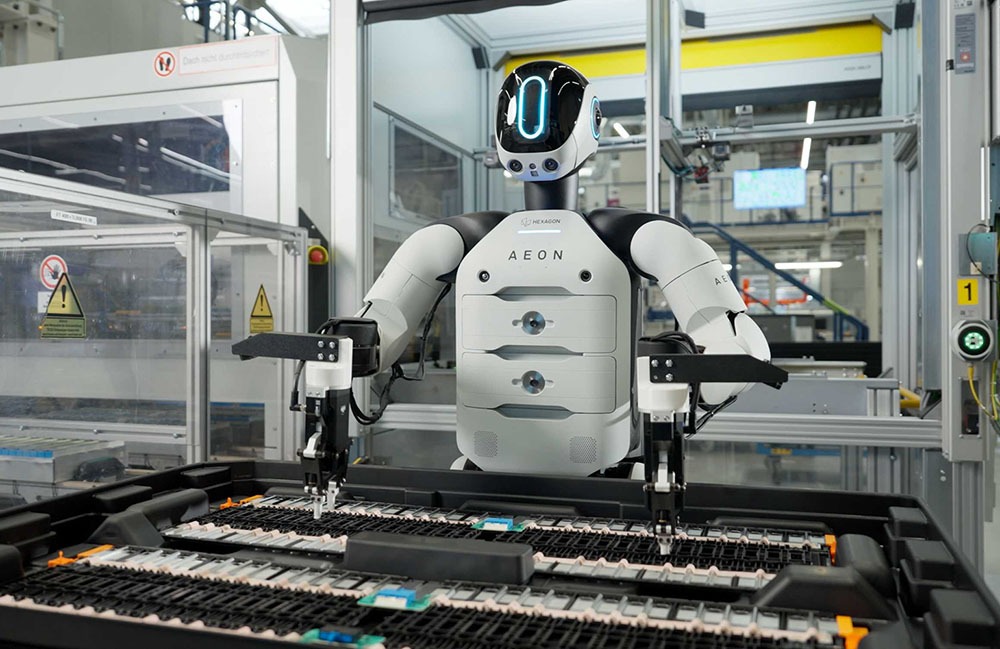
The humanoid robotics landscape in 2026 is crowded with 15+ platforms, each claiming "breakthrough AI" and "near-human dexterity"—but the gap between demo videos and deployable products remains wide. Here's the realistic assessment for teams evaluating humanoid platforms for research, pilot deployments, or commercial operations.
What Changed in 2024-2026: The Real Progress
Policy Learning from Sim-to-Real Pipelines: Foundation models (RT-2, OpenVLA, proprietary Tesla/Figure models) enable faster task adaptation—weeks instead of months. Real impact: Reduces custom programming time by 40-60% for structured tasks. Limitation: Still requires 100-1,000 real-world examples per task variation; demos with 5 examples are lab settings.
Better Onboard Sensing and Compute: 2026 platforms ship with stereo cameras, depth sensors, IMUs, and force/torque sensors as standard (previously $30k+ add-ons). Onboard compute now runs perception + planning + control loops at 30-60 Hz (previously required external PC tethers). Real impact: Easier deployment, faster iteration. Limitation: Battery life dropped to 45-90 minutes under load (vs. 2-3 hours for quadrupeds).
Standardized Software Interfaces: ROS 2 support is now expected, not exceptional. Major platforms publish APIs for third-party developers. Simulation environments (Isaac Sim, MuJoCo, Gazebo) have humanoid models pre-configured. Real impact: Reduces integration time by 30-50%, makes talent recruiting easier. Limitation: Documentation quality varies wildly—Chinese platforms lag Western ones.
The 2026 Humanoid Platform Map
Tier 1: Research and Development Platforms ($80k-$150k): Boston Dynamics Atlas (Research Edition)—$150,000+ (academic pricing), 28 DoF, 1.5m tall, 89kg. Strengths: Best-in-class dynamic locomotion, parkour-level agility, proven durability. Weaknesses: Not for sale commercially, requires PhD-level robotics team, no commercial support SLA. Best for: Top-tier research labs, DARPA-funded projects, benchmarking locomotion algorithms.
Tesla Optimus (Gen 2)—Pricing TBD (estimated $100k-$150k for pilot partners), 28 DoF, 1.73m, 73kg, custom actuators + AI training infrastructure. Strengths: Massive AI training dataset from Tesla factories, end-to-end neural control (minimal hand-coding), Elon hype generates media attention. Weaknesses: Not available for purchase (only factory pilots), unproven outside structured Tesla environments, no third-party integration ecosystem yet. Best for: Large manufacturers willing to co-develop with Tesla (invitation-only), media/marketing value (if you can get one).
Figure 02—$90,000-$120,000 (pilot pricing), 16 DoF, 1.65m, 70kg, OpenAI VLA integration. Strengths: Strong AI partnerships (OpenAI, Microsoft backing), focus on warehouse logistics, serious funding ($675M raised). Weaknesses: Very limited availability (50-100 units shipped in 2026), unproven long-term reliability, requires dedicated support team on-site. Best for: Warehouses testing humanoid logistics, research on VLA deployment, early adopters with VC funding to burn.
Tier 2: Commercial Pilot Platforms ($40k-$80k): Unitree H1—$90,000 (standard config), 25 DoF, 1.8m, 47kg, 360° LiDAR + 3D depth cameras. Strengths: Lightweight design (easier to handle/transport), aggressive pricing vs. Western competitors, strong open-source community, ROS 2 support day one. Weaknesses: Limited English documentation, 6-month lead times, uncertain long-term support outside China. Best for: Universities and research labs (budget-conscious), robotics competitions (RoboCup, etc.), pilot deployments where cost > support priority.
Agibot A2 Ultra—$60,000-$75,000, 29 DoF, 1.75m, 63kg, dexterous hands (12 DoF each). Strengths: Best-in-class hand dexterity (can handle fragile objects, tools), factory-tested in Chinese manufacturing, modular joint design (easier repairs). Weaknesses: Software ecosystem immature compared to Unitree/Figure, limited Western deployment examples, export restrictions may apply. Best for: Manufacturing R&D (China-based operations preferred), dexterous manipulation research, assembly line pilot tests.
Tier 3: Developer and Education Platforms ($16k-$40k): Unitree G1—$16,000 (base model), simplified DoF, compact 1.32m frame, designed for research/education. Strengths: Lowest-cost full-humanoid platform, large community support, extensive tutorials and examples, good for algorithm development. Weaknesses: Payload <5kg (not suitable for industrial tools), battery life 30-45 min, limited durability for rough handling. Best for: University robotics courses, individual researchers, hackathons and competitions, perception/planning algorithm development (without heavy manipulation).
DEEP Robotics DR01—$35,000-$45,000, focuses on outdoor/rough terrain locomotion. Strengths: IP54 rating (better than most humanoids), proven quadruped heritage (locomotion expertise), can handle uneven ground better than competitors. Weaknesses: Manipulation capabilities lag Unitree/Agibot, smaller developer community, primarily Chinese market focus. Best for: Outdoor inspection scenarios, search-and-rescue research, environments requiring weather resistance.
Evaluating Platforms: What Actually Matters
1. Task Fit Over Generality: Match the robot's proven strengths to your pilot task: Locomotion-heavy (stairs, rough terrain)—prioritize ankle/hip DoF, balance control, proven outdoor deployments. Manipulation-heavy (assembly, tool use)—prioritize hand DoF, force control, object interaction demos. Perception-heavy (inspection, navigation)—prioritize sensor suite, compute power, SLAM implementation. Don't buy based on "it can do everything"—it can't, yet.
2. Support and Spare Parts Infrastructure: Can you get replacement actuators in <2 weeks?, what's the warranty (hardware only? software updates?), is there a support engineer within your timezone?, are repair manuals and CAD files available? Downtime dominates TCO for pilot projects. A $90k robot with 3-week part lead times costs more than a $120k robot with next-day spares.
3. Software Ecosystem Maturity: Does it ship with working ROS 2 drivers?, are there simulation models (Gazebo/Isaac Sim)?, is there an active developer forum or Discord?, how many GitHub repos/examples exist? If you're the first user trying to integrate your sensor—budget 3-6 months extra development time.
4. Safety Workflow and Certifications: Does it have emergency stop (physical + software)?, are force limits configurable per joint?, is there geofencing/workspace restriction?, what safety certifications exist (if any)? Most humanoids in 2026 are NOT certified for collaborative operation like cobots. You'll need safety cages, operator supervision, and insurance willing to cover "experimental robotics."
5. Data Rights and Vendor Lock-In: Who owns the data collected during operation?, can you export logs, trajectories, and sensor data?, are AI models proprietary or can you fine-tune locally?, what happens if the vendor shuts down? Startups have raised $2B+ in humanoid funding since 2023—but 40-60% won't survive to 2028. Plan for vendor exit scenarios.
Real Deployment Readiness: 2026 Status
Ready for Controlled Pilot Deployments (Now): Warehouse box moving (flat floors, standardized boxes, supervised operation), factory floor inspection (visual checks, non-contact), research lab demonstrations (controlled environment, expert operators), marketing/events (supervised guest interaction, photo ops). Success rate: 70-85% achieve pilot goals within 6 months.
Borderline / Requires Significant Engineering (2026): Assembly line integration (tool use, coordinated manipulation), retail customer interaction (unstructured conversations, navigation in crowds), healthcare assistance (patient lifting, medication handling), outdoor delivery (weather, uneven terrain, autonomous navigation). Success rate: 30-50% pilots meet goals; most require 12-18 months of custom development.
Not Ready / Avoid Unless You're Doing Pure Research (2026): Autonomous household tasks (cleaning, cooking, laundry), Unstructured outdoor work (construction, agriculture), human-level dexterity (surgery, fine crafts), 24/7 unsupervised operation in dynamic environments. Demos exist—production-ready solutions do not. Budget 3-5+ years of R&D if attempting.
Pricing Trends: What to Expect in 2026-2027
Continued Price Compression: Entry platforms ($16k-$25k) will improve capability 20-30% without price increases—driven by Chinese manufacturing scale. Mid-tier ($40k-$80k) competition intensifies as Tesla/Figure scale production—expect 15-25% price drops by late 2027. Premium ($100k+) holds steady—these are low-volume, high-support platforms for early adopters.
Shift to Robot-as-a-Service (RaaS): Instead of buying, lease/rent models emerging: monthly rates $3,000-$8,000 depending on platform and support level, includes hardware, software updates, and maintenance, pilot commitments (6-12 months minimum). Best for teams testing feasibility before capital purchase.
GEO Considerations: Regional Availability and Support
North America: Figure, Tesla (pilot only) have best local support. Unitree ships globally but support is China-based (8-12 hour timezone lag). Expect 8-16 week lead times, 15-25% import duties on Chinese platforms.
Europe: Limited local assembly—most platforms ship from US or China. CE marking rare (most sold as "research equipment" to bypass). PAL Robotics (Spain) and Engineered Arts (UK) offer local alternatives but smaller ecosystems.
Asia-Pacific: Best availability for Chinese platforms (Unitree, Agibot, DEEP Robotics). Lead times 2-4 weeks in China, 6-10 weeks elsewhere in APAC. Local integrators emerging in Japan, South Korea, Singapore.
Bottom Line: Manage Expectations, Plan for Iteration
Humanoid robotics in 2026 is where collaborative arms were in 2014—commercially available but requiring significant integration effort, pilot-ready but not production-ready at scale, and expensive relative to task-specific automation. If you're evaluating humanoid platforms: Start with a narrowly-defined pilot task (not "general warehouse automation"), budget 2-3× the robot cost for integration and iteration, plan for 12-18 month timelines (not 3-6 months), and treat it as R&D investment, not immediate ROI. The technology is real—but the hype is 3-5 years ahead of deployment readiness for most use cases.
Ready to evaluate robots?
Tell us what your operation needs, or compare models side by side.