
Buying Collaborative Arms in 2026: Complete Guide for Mid-Sized Factories
Payload vs. reach tradeoffs, $25k-$85k price breakdown, safety certifications decoded, ROS integration paths, and 7 real deployment patterns from electronics assembly to machine tending.
Mid-sized manufacturers face a different procurement challenge than automotive giants: you need collaborative robots that justify ROI with 1-2 shifts, not 24/7 operation—and you can't afford a $200,000 systems integration project. Here's what actually matters when buying cobots in 2026, based on 150+ factory deployments.
The Cobot Landscape: What Changed in 2024-2026
Price Compression: Entry cobots now $20,000-$35,000 (was $45k+ in 2022), mid-range $35,000-$65,000 with force sensing, premium $65,000-$85,000 for 20kg+ payload or >1.7m reach. Chinese manufacturers (JAKA, Elephant Robotics, Franka Emika alternatives) drove 30-40% price reductions.
Software Democratization: No-code programming interfaces are now standard—80% of tasks programmable by operators in <30 minutes. ROS 2 support becoming mandatory for serious industrial deployment. Cloud-connected fleet management (previously enterprise-only) now available on $35k+ models.
Safety Standards Evolution: ISO/TS 15066 compliance is baseline—expect power and force limiting (PFL) mode. New: collaborative workspace monitoring via 3D sensors (eliminates some safety fencing), SIL 2 or SIL 3 rated safety controllers, faster emergency stop response (<50ms on 2026 models vs. 80-120ms in 2022).
Payload vs. Reach: The Core Tradeoff
Light Assembly and Pick-and-Place (0.5-3 kg payload): Optimal reach: 600-900mm, use cases include electronics assembly, circuit board handling, small part sorting, packaging and labeling. Representative models: Universal Robots UR3e ($26,000), JAKA Zu 3 ($18,000), Dobot CR3 ($15,000). Pros: Fast cycle times (2-3 sec), high precision (±0.05mm), affordable entry point. Cons: Can't handle heavier components or tools.
Machine Tending and Tool Handling (3-10 kg payload): Optimal reach: 850-1,300mm, use cases include CNC machine loading/unloading, collaborative sanding/grinding, inspection with probe tools, fastener driving. Representative models: UR5e ($35,000), FANUC CRX-10iA ($45,000), Kassow KR810 ($42,000). Pros: Versatile for 60-70% of factory tasks, proven integration ecosystem. Cons: Slower than dedicated pick-and-place for high-speed needs.
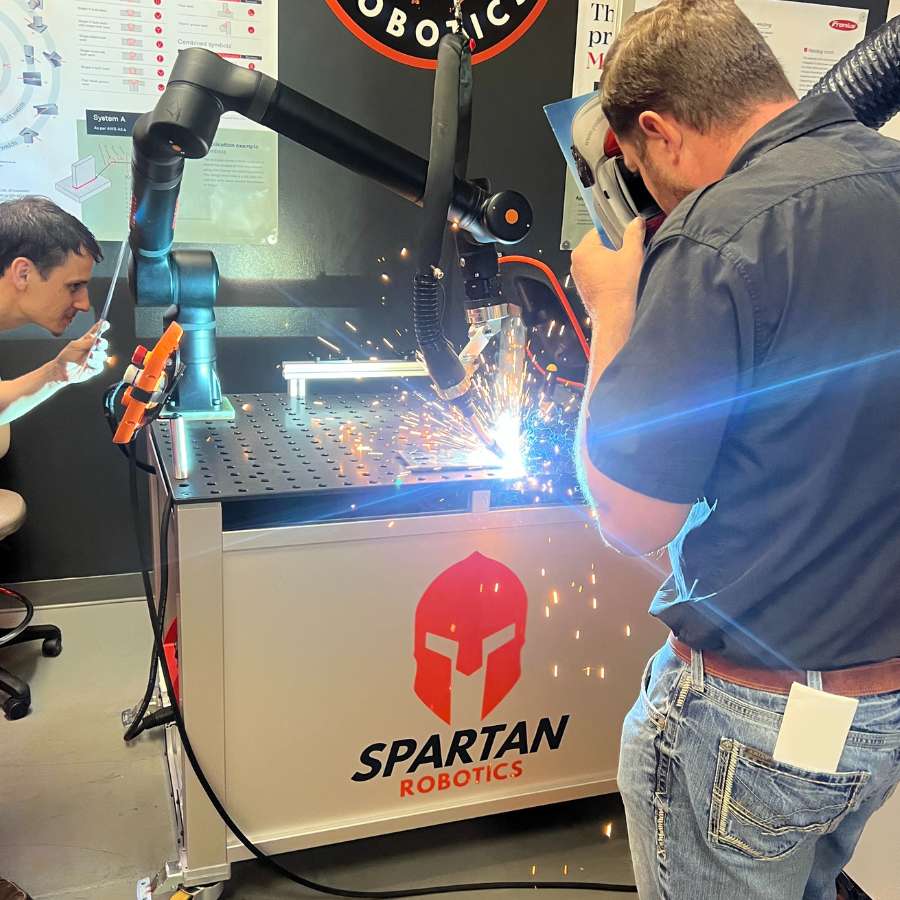
Heavy Handling and Palletizing (10-20 kg payload): Optimal reach: 1,300-1,800mm, use cases include box palletizing, heavy part transfer, collaborative welding, large assembly operations. Representative models: UR10e ($45,000), ABB GoFa 10 ($52,000), Techman TM20 ($48,000). Pros: Replace manual heavy lifting (ergonomics win), long reach for large work cells. Cons: Slower movement to maintain safety, require more robust mounting.
Safety Certifications Decoded: What Actually Matters
Mandatory for US/Europe Deployment: ISO/TS 15066—collaborative robot safety specification, defines power and force limiting, ISO 10218-1/2—industrial robot safety standard, CE marking (Europe) or NRTL certification (UL, CSA for North America), RIA R15.06—US robot safety standard. Without these: insurance won't cover, OSHA violations likely, integration partners won't touch it.
Nice-to-Have (But Increasingly Expected): TÜV or SGS third-party validation, EMC compliance for industrial environments (EN 61000), IP54 or higher for dust/splash protection, Functional safety rating (SIL 2 minimum, SIL 3 better). Impact: affects insurance premiums by 10-25%, required by tier-1 automotive/aerospace suppliers, matters for export to strict markets (Germany, Japan).
ROS Integration: Why It Matters in 2026
The ROS (Robot Operating System) Advantage: Vendor independence—swap gripper/sensor brands without rewriting code, open-source libraries—vision, motion planning, AI already built, simulation tools—test changes in Gazebo before production, talent availability—ROS skills common; proprietary platforms aren't. 60% of new cobot deployments in 2026 involve ROS at some level—even if using vendor GUI for basic tasks.
What to Ask Vendors: Do you provide a ROS driver? (ROS 1 and/or ROS 2?), can I access joint states and trajectory control via ROS topics?, is there a MoveIt configuration available?, what's the update latency (ROS control loop frequency)? If vendor says "we have our own better system"—that's a red flag unless you're locked into their ecosystem (e.g., UR+ ecosystem is mature enough to justify).
7 Real Deployment Patterns: What Works vs. What Struggles
Pattern 1: CNC Machine Tending (Success Rate: 85%): Task: Load raw parts into CNC, unload finished parts. Cobot: 5-10kg payload, 1,000-1,300mm reach. Keys to success: Standardized part fixtures, simple gripper (pneumatic or electric), 3-4 hour ROI analysis (vs. operator standing idle). Common failure mode: Parts not standardized—gripper changes kill ROI.
Pattern 2: Quality Inspection with Probe (Success Rate: 70%): Task: Measure part dimensions with contact probe or gauge. Cobot: 3-5kg payload with high repeatability (±0.03mm). Keys to success: Fixed inspection sequence, environmental temperature control, regular calibration schedule. Common failure mode: Expecting cobot to adapt to part variation—you need vision system for that ($15k+ extra).
Pattern 3: Packaging and Box Erecting (Success Rate: 90%): Task: Pick items, place in boxes, seal or label. Cobot: 3-7kg payload, vision system for item location. Keys to success: Consistent product shapes, repeatable box positions, integration with conveyor timing. Common failure mode: "Bonus feature" requests (date coding, weight checks) added mid-project—stick to core task first.
Pattern 4: Collaborative Sanding/Finishing (Success Rate: 60%): Task: Surface finishing with orbital sander or buffer. Cobot: 7-10kg payload with force control. Keys to success: Constant force mode tuning, dust extraction integrated, operator defines rough areas to prioritize. Common failure mode: Expecting cobot to match skilled human finisher—it excels at consistency, not artistry.
Total Cost of Ownership: Beyond the Robot Arm
Typical Small Deployment TCO (Year 1): Cobot arm (5kg, mid-range): $38,000, end-effector/gripper: $3,500-$8,000, mounting/safety equipment: $2,000-$5,000, integration labor (if using partner): $8,000-$25,000, training (2 operators, 3 days): $3,000-$6,000, software licenses (vision, if needed): $2,000-$5,000. Total Year 1: $56,500-$87,000 (for single work cell). Year 2+ ongoing: software updates, spare grippers, occasional recalibration—budget $4,000-$8,000/year.
ROI Reality Check: When Cobots Pay Back Fast vs. Slow
Fast Payback (<12 Months): High-volume repetitive task (>5,000 cycles/month), replaces 0.5-1.0 FTE (operator doing dull task 4-6 hours/day), no complex vision or force control needed, parts already fixtured/standardized. Example: PCB assembly pick-and-place saved $52,000/year labor, ROI in 9 months.
Slow Payback (24-36 Months): Low-volume, high-mix production (<1,000 cycles/month), requires frequent reprogramming or changeovers, complex vision or force sensing, significant fixturing investment needed. Example: Custom metal fabrication welding—cobot cost $68,000 total, saved $28,000/year, ROI in 30 months.
Vendor Selection: 5 Critical Questions
1. What's your ACTUAL lead time? (Marketing says 6 weeks; reality often 12-16 weeks for custom configs). 2. Who handles integration? (DIY, certified partner, or vendor professional services—and what does each cost?). 3. What's included in warranty? (Hardware only? Software updates? On-site service? Replacement parts?). 4. How do software updates work? (Cloud-pushed? Manual download? Cost after Year 1?). 5. What happens if you go out of business? (Can I get source code? Spare parts from third party? This matters for new brands.).
Bottom Line: Buy for Task, Not Brand
In 2026, the cobot market is mature enough that brand loyalty matters less than task fit. A $22,000 Chinese cobot can outperform a $50,000 premium brand for simple pick-and-place—but the premium brand wins on support, spare parts logistics, and integration partner ecosystem. Start with your task (cycle time, payload, precision), validate with 2-3 vendor demos using YOUR parts, and build TCO models including integration labor. The "best" cobot is the one that pays for itself fastest in your specific workflow.
Ready to evaluate robots?
Tell us what your operation needs, or compare models side by side.